Electric Drum Pump Motors: Features, Benefits & Selection Advice
Everything You Need to Know About Drum Pump Commutator Motors
Electric pump motors play a crucial role in industrial fluid transfer. They are reliable, efficient and versatile power sources for a wide range of pumping applications. Whether you’re seeking a cost-effective solution for dispensing liquids, or weighing up the safety and performance benefits of different designs or voltage options, understanding the fundamentals of commutator motors is essential.
This guide covers how commutator motors work, their key benefits and what to consider when selecting a drum pump motor for your specific application. Read on to make informed decisions for safe, efficient and cost-effective drum emptying.
What is an electric drum pump, and how does it work?
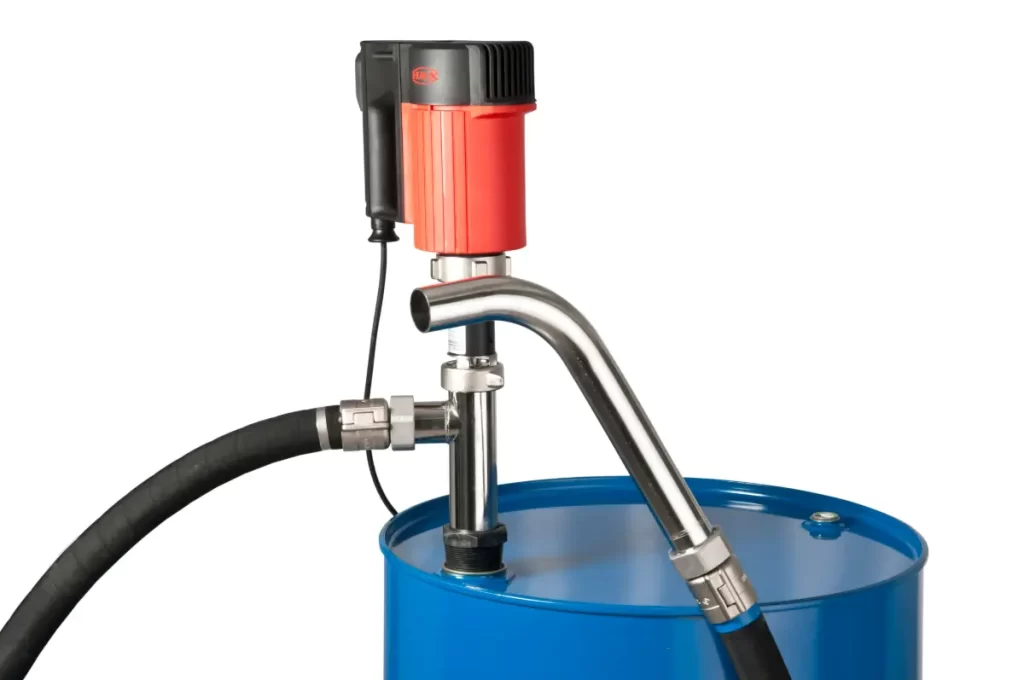
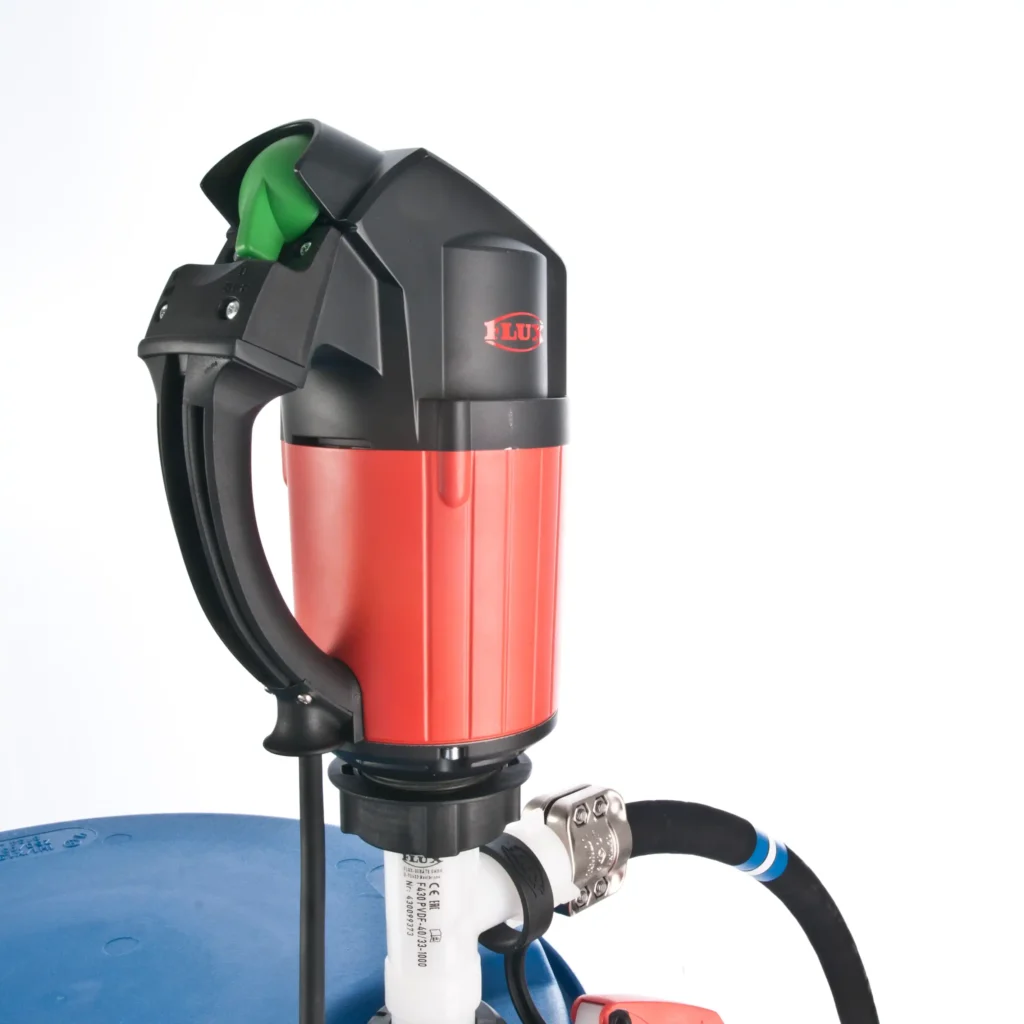
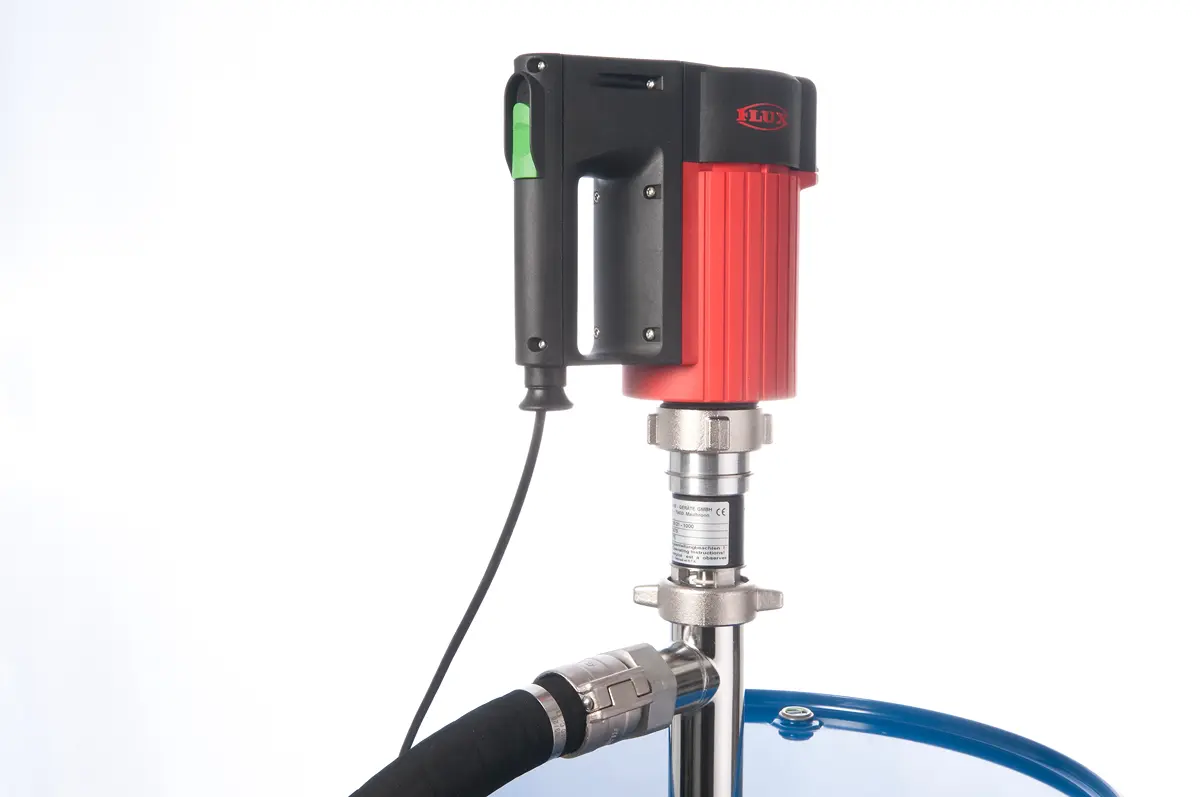
An electric drum pump is a motor-driven pump designed to efficiently transfer liquids from drums, barrels and IBC containers. It consists of a quick-release motor and a pump tube, with the fluid inlet at the bottom of the tube. The motor and pump are two separate items which work together to move fluids safely and quickly. The pump tubes come in different lengths and materials to match the container size and the liquids you need to pump. Both light duty and heavy duty designs are available.
The pump tube typically houses a long driveshaft with a fixed impeller mounted at the inlet. Insert the pump into the container, connect the electric motor, and attach a discharge hose to the pump outlet. When you switch on the motor, it turns the driveshaft and impeller, which drives centrifugal force into the liquid. Thus, liquid is driven up the pump tube and pumped away down the hose, to the discharge point. Other pump tube designs are available, e.g. progressive cavity or piston type pumps, which are usually specified for handling high-viscosity media.
Electric barrel pumps are available with various electric motor types. These include brushed & brushless single-phase motors and three-phase motors, depending upon factors such as the fluid viscosity, transfer distance and power source available on site.
What is a commutator motor?
A commutator can be described as a rotary electrical switch. It periodically reverses the current direction between a rotor and an external circuit. The commutator consists of a cylinder with multiple metal contact segments, which mount on the rotating armature of the motor.
Two or more electrical contacts, known as brushes, typically made from a soft conductive material such as carbon, press against the commutator. These brushes maintain sliding contact with successive segments of the commutator as it rotates, connecting the windings (coils of wire) on the armature, to the commutator segments.
Commutators are essential in direct current (DC) motors and dynamos (DC generators). In a motor, the commutator supplies electric current to the windings. By reversing the current direction in the rotating windings each half turn, it generates a steady rotating force (torque). In a generator, the commutator collects the current produced in the windings, reversing the current direction with each half turn. This action serves as a mechanical rectifier, converting the alternating current from the windings into unidirectional direct current for the external load circuit.
What are the benefits of electric drum pump commutator motors?
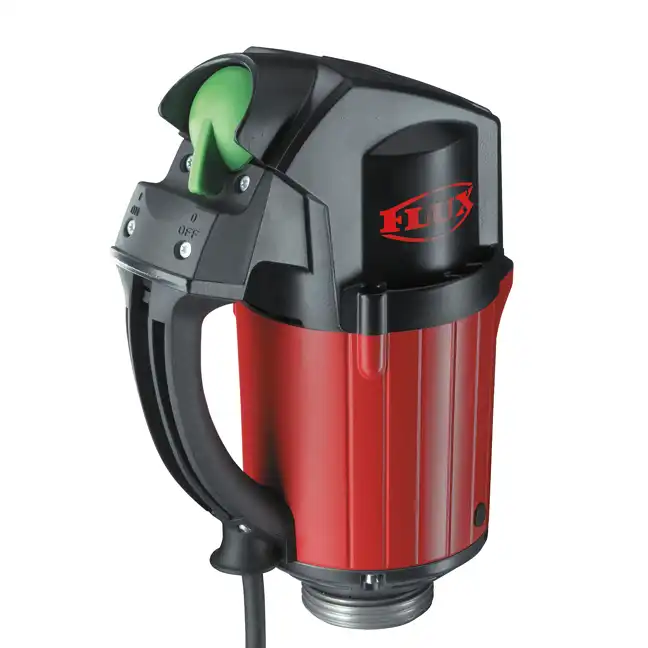
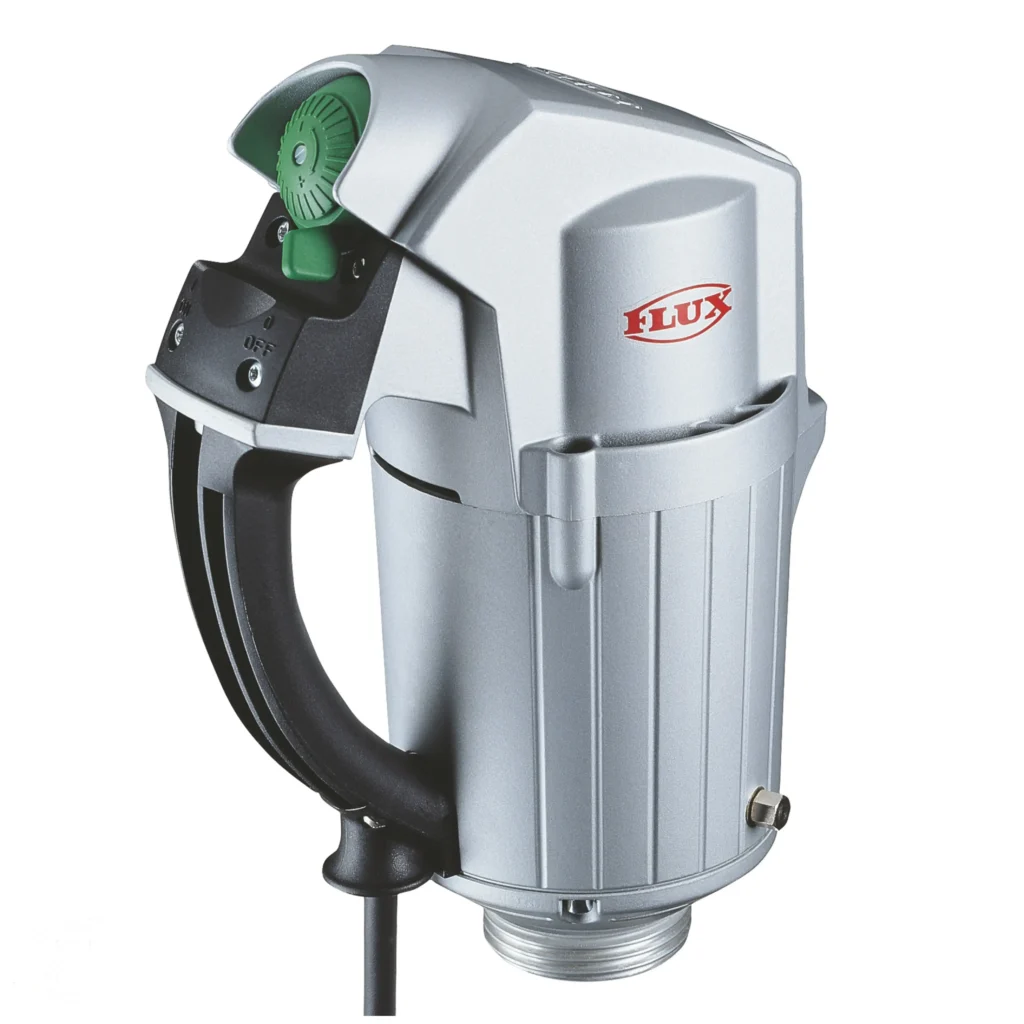
Flux single-phase electric commutator motors, or brushed motors, offer several advantages:
Cost-effective: Commutator motors are typically less expensive to manufacture compared to other types of motors, making them a cost-effective choice for many applications. Our designs are easy to repair and maintain, consequently delivering great return on investment.
High starting torque: These motors deliver high starting torque, which is beneficial when pumping high density or high viscosity fluids.
Speed control: Flux single-phase electric drum pump motors with speed control are ideal when dispensing liquids into different sized containers, reducing the risk of spills and splashing.
Simplicity and reliability: Their simple, proven design makes these electric drum pump motors reliable and easy to maintain. Furthermore, you can replace carbon brushes and bearings quickly and at low cost. All spare parts are available to buy separately, for economical repairs.
Compact size: They are ergonomically designed, compact and light, for safe manual handling. Furthermore, they are suitable for applications where space is limited.
Versatility: Highly portable and easy to detach from the pump tube, our motors can be used anywhere on site.
Durability: Our IP 55 electric drum pump motors can withstand the toughest working conditions. IP 24 motors utilise tough, impact-resistant polyamide housings.
Efficiency: Flux commutator motors run more slowly (8,500 RPM vs. 11,000 RPM for roughly the same performance), with around 30% less current draw than competitor’s motors.
Which is better: 110 V or 230 V electric drum pump motors?
When choosing between 110 V or 230 V single-phase electric pump motors, consider the factors below to determine which voltage best suits your needs:
The standard UK mains electricity supply is 230-240 V. Manufacturers produce 230 V motors because there is high demand and they are compatible with the existing electrical infrastructure. Flux 230 V motors include a 3‑pin UK plug. Therefore, they are convenient and cost-effective to use. They support both permanently installed pumping systems and portable applications such as barrel pumps.
Although less common in the UK than the standard 230 V mains supply, many larger construction, industrial and manufacturing sites use 110 V power. This is due to safety requirements which demand lower voltage equipment. 110 V power supply, especially when tapped to earth, offers a safety advantage and reduced chance of operator injury if a malfunction or accident occurs when using portable, hand-held equipment. Voltage and amperage (the measurement of current) are directly proportional. Therefore, 110 V equipment is inherently safer, because its lower voltage carries less current than 230 V.
110 v or 230 v: a more detailed look
Step-down transformers (with round safety plugs) are used to reduce the voltage from 230 V to 110 V. Therefore, 110 V power is a more expensive option overall, but perhaps not by much, when considering total plant operating costs 230 V motors are typically more efficient than their 110 V counterparts. This is because they draw less current for the same power output, leading to reduced energy losses in the form of heat. Although less efficient, 110 V drum pump motors have the same power ratings as their 230 V equivalents. Therefore, 110 V motors are ideal for smaller portable pumps and hand-held tools. Such equipment generally requires lower power and typically has shorter run times, however, Flux 110 V barrel pump motors are still S1 marked, i.e. rated for continuous duty applications.
Choose 110 v or 230 v
Choose 110 V electric drum pump motors where safety is a priority. For example, construction sites or larger manufacturing plants. Choose 230 V electric drum pump motors for continuous-duty applications and where straightforward connection to electrical infrastructure, at minimal cost, is important.
How do I choose the right electric drum pump for my application?
Selecting the right electric drum pump depends on several factors, including certification required, fluid viscosity, density, desired flow rate, duty cycle and the power supply available at site. For high-viscosity liquids, a three-phase motor with constant torque is ideal.
For continuous operation on single-phase power supply, a brushless, heavy-duty motor offers the best performance. Always check motor power rating, specification, speed range and safety features to ensure it meets your specific requirements. Additionally, consider chemical compatibility of the pump tube with the liquids themselves. Flux manufactures pump tubes in five different materials, to suit a wide range of fluids. For further guidance please see our drum pump selection guide here.