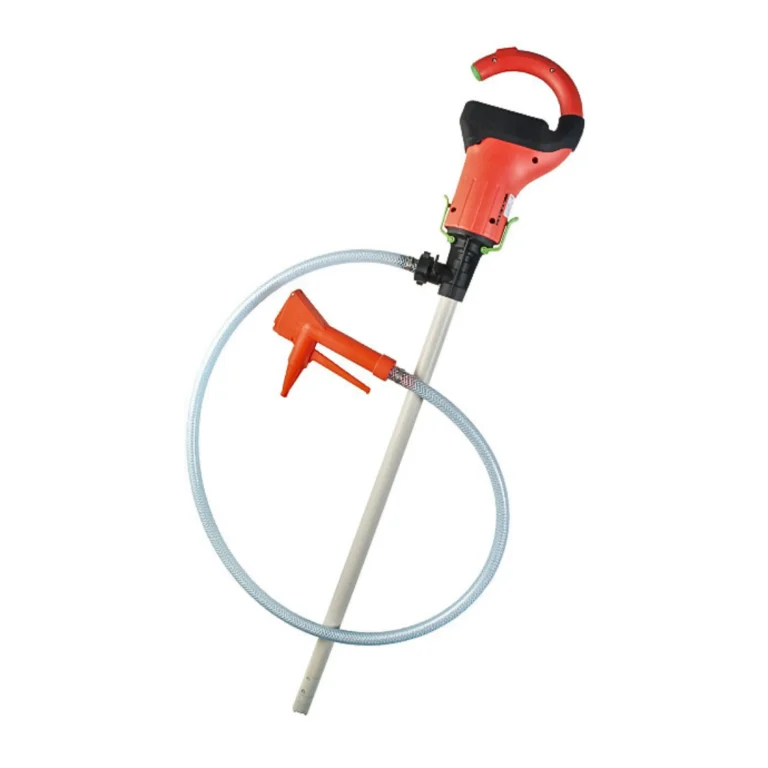
Barrel pumps (also known as drum pumps) are portable devices used for emptying drums, barrels, IBC tanks and smaller containers. These pumps are long and slim – they are designed to stand on the bottom of the vessel. They are lightweight and easy to insert into narrow barrel openings or open-topped containers. Typically, they consist of a drive motor or hand-operated mechanism, a rigid pump tube (also known as a pipe, lance, wand, or stick), a hose assembly and a nozzle or spout for dispensing fluids. To operate, simply insert the pump into the drum, enabling liquid to be pumped from the bottom of the container.
The type of fluid, i.e. its rheology, density and viscosity, as well as the desired flow rate and discharge pressure, all influence barrel pump selection. You can choose from various body, driveshaft and o-ring materials, to ensure compatibility with the fluid being pumped. Additionally, several types of drive motors are available, e.g. compressed air, electric or battery powered.
These pumps deliver efficient and safe liquid transfer, reduced risk of spills or leaks and allow for controlled flow rates during dispensing.


Hand-operated transfer pumps generally use a lever or rotary handle operated pumping mechanism, while powered pumps are usually, but not exclusively, centrifugal or positive displacement designs.
Vertical centrifugal pump designs (e.g. Flux F 300 and F 400 models) are not self-priming – they rely on the impeller being immersed in the fluid to operate. Liquid flows into the pump inlet under the effects of gravity and atmospheric pressure. When the container is nearly empty, air will enter the pump and liquid flow will decrease to zero. The pump will start to run dry. Motor speed will increase, as the motor is no longer operating under pumping load. The operator will notice an increase in noise produced by the drive motor. At this point, the pump should be switched off to avoid damage through overheating.
Positive displacement models, such as progressive cavity pumps, can be described as self-priming pumps. In a typical container emptying application (with the pump standing vertically on the bottom of the vessel), liquid again flows directly into the pump inlet under the effects of gravity and atmospheric pressure. However, these pumps also create strong suction, further helping to draw product into the pump inlet.
Therefore, these pumps are ideal for pumping viscous and adhesive materials. The suction effect plus flow under gravity and atmospheric pressure combine to efficiently fill the pumping chamber with fluid. This is a significant benefit when compared to surface mounted, self-priming designs, such as air-operated double diaphragm (AODD) pumps, where performance is significantly reduced by the effects of priming. Progressive cavity pumps can therefore pump more difficult, adhesive materials in barrel emptying applications.
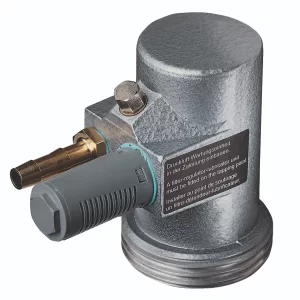
Air powered transfer pumps are primarily used to transfer liquids from one vessel to another, just like other types of barrel pumps. They consist of a pneumatic drive motor and a close-coupled pump tube. Expanding compressed air drives the pneumatic motor.
Subsequently, the expanding air turns rotary vanes inside the motor at high speed, typically up to 10,000 RPM. This energy is converted into rotary mechanical motion in the pump. Pneumatic motors can be used to drive both centrifugal pumps (for low viscosity fluids) and positive displacement pumps (for high viscosity fluids). A low-ratio gearbox is sometimes used to reduce rotational speeds to <1000 RPM when powering positive displacement pumps.
Pneumatic drum pumps are ideal for transferring flammable fuels and solvents. Additionally, you can use them in heavy-duty applications and for handling large volumes. Constructed from conductive stainless-steel 316 tubes, these pumps are also useful for transferring flammable media of various hazard classes, in hazardous environments. Flux ATEX barrel pumps and air motors are ATEX approved, therefore guaranteeing safe operation in Zoned areas with dangerous levels of explosive gas or vapour.

A drum pump and a barrel pump are the same type of industrial transfer pump. The two terms are used interchangeably. Both names describe a portable pump with a long, narrow pump tube designed to reach the bottom of containers such as 55‑gallon drums, steel barrels, plastic drums, IBCs, open tanks and similar vertical vessels.
They share the same modular architecture, typically consisting of a drive motor (electric, pneumatic, or battery powered) coupled to a pump tube that uses either a centrifugal impeller (for low‑viscosity fluids) or a positive‑displacement rotor-stator combination (for higher‑viscosity fluids).
Because the pump’s geometry, materials and performance characteristics are identical regardless of the name, engineering specifications focus instead on preferred power supply, fluid viscosity & density, chemical compatibility, required flow rate and discharge pressure, duty cycle and safety or regulatory requirements. For example, ATEX or food approvals. The dual terminology exists mainly due to regional language differences but in practice, both names refer to the same pump family.
Yes. The most cost-effective option depends on the container size, liquid, required flow rate and frequency of use. For occasional, low-volume transfer duties, or where electricity or compressed air is unavailable, a hand pump provides a simple, economical solution for dispensing low-viscosity liquids.
For more frequent use, the lightweight CombiFlux portable drum pump kit delivers higher flow rates and ultimate portability thanks to its cordless motor. For 25-litre containers and other small vessels, the compact, seal-less JuniorFlux F 314 with two-speed electric motor provides controlled dispensing with minimal maintenance.
Always check that motor design, pump materials, hose and seals are compatible with the liquid and operating environment before selecting a model.

The Flux pump range is used in every industry, however, they are commonly used in the manufacturing and dispensing of chemicals, cosmetics, pharmaceuticals, oils, lubricants and food beverage products. In addition, you will find them in oil gas production facilities, plus agricultural, marine and water treatment applications.
Visit our pump by industry page, to find your industry and consequently the Flux pumps we recommend for your specific applications.
Our barrel transfer pumps comprise of three main parts: the motor, the pump tube and the hose connection. Assembly is simple and user-friendly. First, unbox the products. Note that the pump tube is supplied with a captive union nut with female thread. The lower motor housing has a matching male thread. Attach the pump tube to the motor. The motor driver will automatically engage with the recessed coupling star in the top of the pump. Tighten the pump union nut to the motor by hand, ensuring a secure fit.
Attach the discharge hose (can be supplied by Flux or others) to the hose connection and secure with a suitable hose clamp. The hose connection has a captive union nut with female thread. Connect the union nut to the male threaded discharge port on the pump and tighten. If the pump is to be used with low flash-point flammable liquids, or inside an ATEX zoned area, ensure that earth cables are connected securely (if required) and that earth bonding has been checked.
Now the pump is ready to be placed into the barrel or IBC container.
| Pump type | Best for |
|---|---|
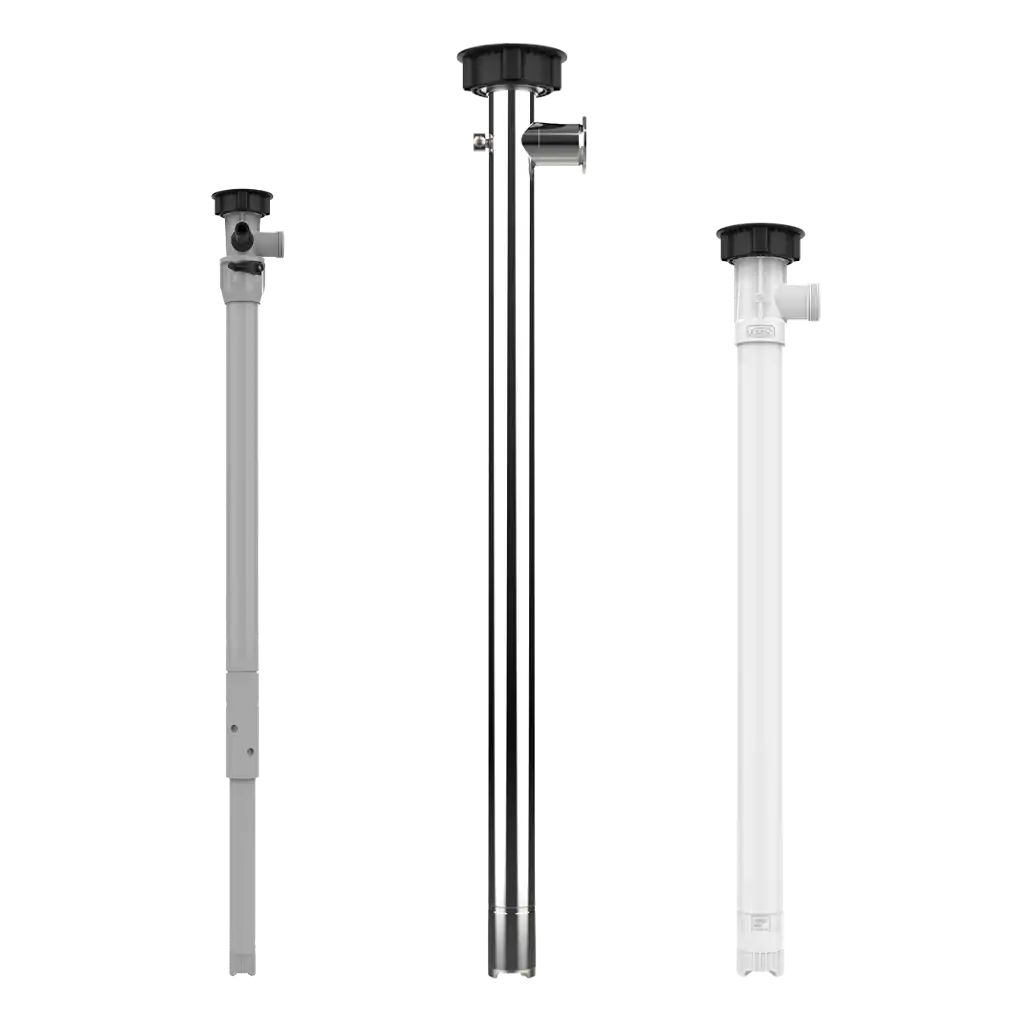
| Polypropylene pumps | Dilute acids, alkalis and chemicals |
| PVDF pumps | Concentrated and highly corrosive acids |
| Aluminium pumps | Mineral oils, glycol and diesel |
| Pneumatic barrel pumps | Flammable liquids and fuels |
| Progressive cavity pumps | High viscosity fluids |
| Centrifugal barrel pumps | Low viscosity liquids |
| Cordless battery pumps | Mobile applications |
| Stainless steel pumps | Solvents and flammable liquids |
Our most common pumps are centrifugal designs. These pumps create limited suction once primed and producing flow, but they cannot dry prime. Flow will only begin if the liquid level in the barrel is above the level of the impeller. The impeller is positioned approximately 7-8 mm away from the bottom of the barrel. Once the liquid reaches this level, air will enter the pump, and it can no longer work.
At this point, the load on the pump impeller will decrease and motor speed will increase. This van be noticed by an increase in noise output from the motor. The operator should turn off the pump to avoid dry running, otherwise it may overheat. This is particularly important when using pumps that are fitted with a mechanical seal.
When the pump is switched off, residual liquid inside the pump tube will drain back into the barrel. The depth of the remaining liquid will correspond to the level of the impeller, i.e.. 7-8 mm. If drain-back is undesirable, for example, the liquid is of particularly high value, or disposal costs are high, consider our F 425 model with back-flow valve. This pump will ensure that 99.9% of the liquid is removed from the barrel.

Flux Pumps are considered the world’s best drum pumps. We offer class-leading designs with many unique features and benefits:
By combining durability, versatility, efficiency, safety, ease of use, innovative technology and customisation, Flux provides unmatched solutions for container pumping applications. Therefore, Flux is the no. 1 choice for businesses seeking reliable, high-performance barrel pumps.
Flux created the World’s first electric barrel pump, comprising a vertical pump tube and a separate electric motor, coupled to the pump by a hand-operated union nut. The basic operating principles of this pump have now been copied by many competitors. However, there are several reasons why Flux pumps are considered to be the best. And why our heavy duty barrel pumps continue to be specified by industry leading brands worldwide.
The main reason why our pumps perform so well comes down to the patented design features that are unique to Flux. Everywhere you look in our product range, you will see special features that ensure our pumps deliver class-leading service life:
Our seal-less pumps utilise our unique spiral shaft bearing, even our light-weight F 300 series pumps. This bearing supports the centre section of the driveshaft. Its comparatively high surface area is designed to reduce deflection and vibration that occurs with lesser pumps with conventional bearings. Vibration increases wear throughout the pump, eventually leading to failure.
Our FP 424 series seal-less pumps are fitted with strong 6 mm diameter driveshafts, designed to minimise deflection at high speeds. The shaft is also reversible – when rotated, the shaft bearings will locate at different positions on the shaft, rather than continuing to wear the same areas of the shaft as before. Therefore, the service life of the shaft is effectively doubled.
The Flux FP 424 pump has an oversized lower bearing housing with four thick bushing rings. This ensures radial loads are distributed across a large area when the impeller is spinning at high speeds.
Flux are experts in manufacturing vertical pumps. We have design expertise, manufacturing tooling and production experience that allows us to create pumps in special lengths. This includes short pumps for use where space is limited, such as emptying trays, or for incorporation into OEM products. In addition, our unique design features such as steel-cored inner tubes, allow us to manufacture pumps up to 3,000 mm long.
These unique design features, combined with our manufacturing capability, class-leading durability and readily available spare parts, means that Flux leads the way in whole-life ownership costs. Why spend money replacing pumps when you can repair and save? We have proven that investing in a Flux F 400 pump is a truly sensible decision for any business.
Our F 430 plastic pumps in polypropylene and PVDF have unique steel-cored inner tubes. The steel core is over-moulded with plastic, giving the pump a huge advantage in terms of strength, bearing support and vibration resistance. In addition, the rigid inner tube provides optimal support to the mechanical seal assembly. The seal remains stable when running at high speeds, or when operating at high temperatures. When combined with a comprehensive range of spare parts, Flux can claim to manufacture the only truly serviceable plastic pump.
Once the pump is placed into the barrel, ensure the discharge hose is positioned securely in the container to be filled. Various accessories for ensuring safe filling operations are available. These include hand nozzles, non-return valves, discharge spouts and fume cones. Each of these accessories will require separate consideration.
The pump is now ready to be switched on, using the recessed on-off switch on the motor. Assuming the discharge hose is open-ended, flow will start immediately and liquid will begin filling the container. Some motors have built-in speed control switch, which is used to vary the flow rate. Once the desired quantity has been dispensed, the motor can be switched off.
Residual liquid left in the discharge hose will continue to drain into the container until the hose is empty. If this is undesirable, consider fitting a handle nozzle or non-return valve, both of which will ensure residual liquid remains in the hose.

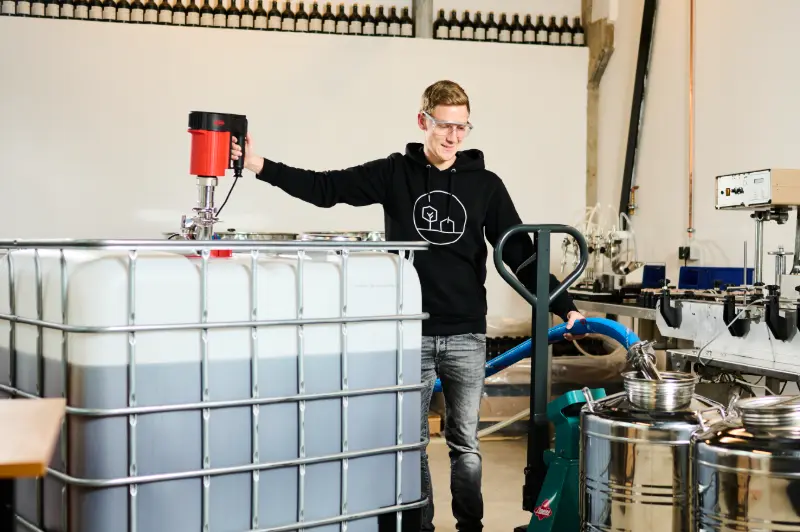
Container pumps are an efficient, portable, controlled method of transferring liquids from drums, IBCs and other containers. Compared with manually tipping, or lifting and pouring from a container, a correctly specified pump can eliminate manual handling, vastly increase flow rates and improve control, while minimising spills and product waste.
Pump performance depends on the liquid’s rheology, viscosity and density, the required discharge pressure, the pump impeller design, discharge hose length, vertical lift needed and the duty cycle. Centrifugal pumps are commonly used with low-viscosity liquids, while high-viscosity or adhesive products may require a positive displacement pump, e.g. a progressive cavity design, to achieve smooth, controlled flow. Use our pump selection guide to compare suitable pump types and configurations.
Looking for more information on barrel pumps? Use the links below, or contact us today and our sales team will be happy to help.


